Tatum's Achilles Journey: Why He Won't Return as a 'Shell of Himself'
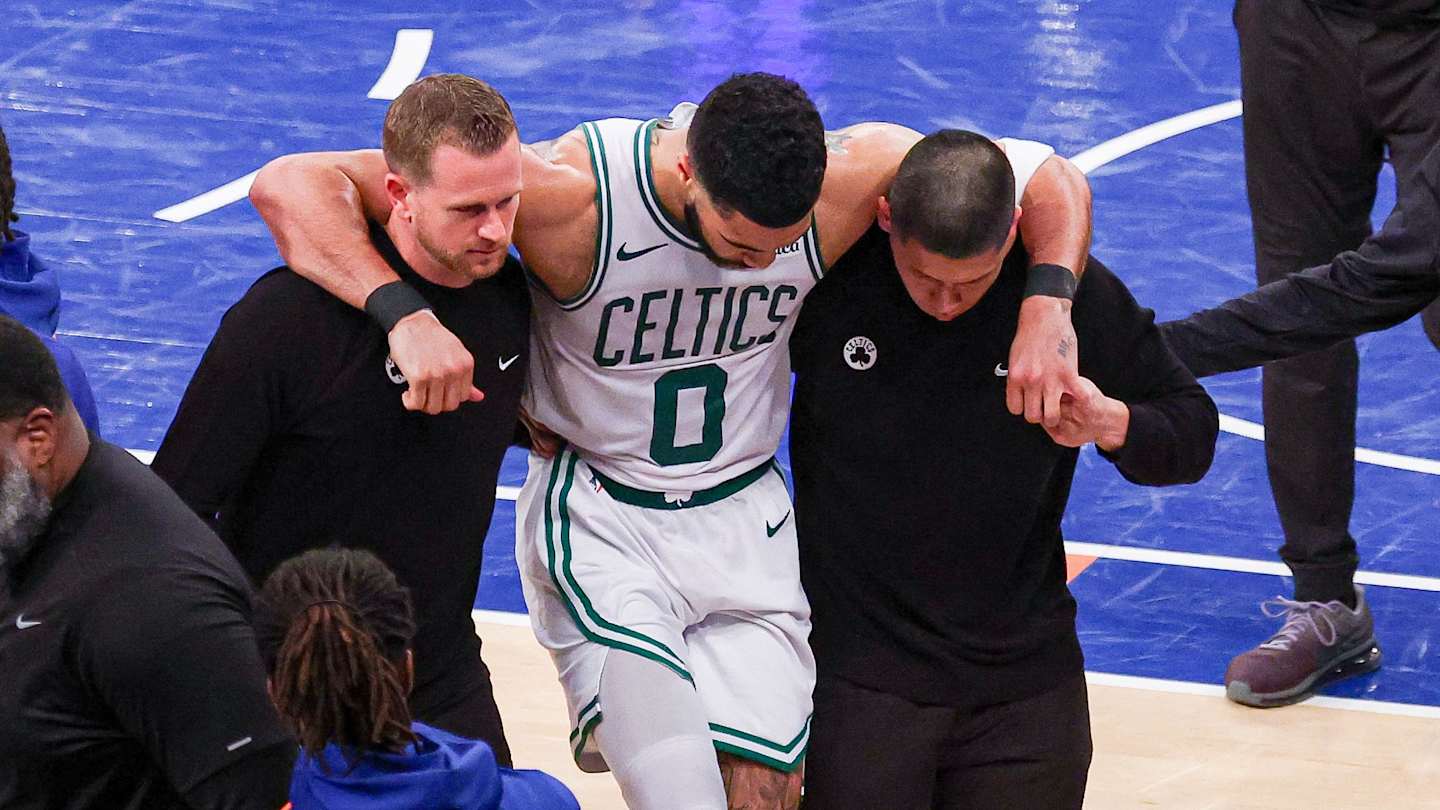
The sight of Jayson Tatum clutching his right Achilles tendon in Game 4 of the 2025 playoffs against the New York Knicks sent a shiver down the spine of every Boston Celtics fan and NBA observer. A ruptured Achilles is one of the most devastating injuries in professional sports, notorious for sidelining athletes for extended periods and, in some cases, permanently altering their trajectory. Yet, as Tatum navigates a meticulous recovery, his public statements and the Celtics' surprising success paint a clear picture: when
Jayson Tatum eventually steps back onto the court, it won't be as a diminished version of himself, but as a player who has painstakingly rebuilt his body and mind.
The Deliberate Road Back: Patience as a Virtue
Tatum's journey back to the hardwood is a testament to the modern advancements in sports medicine and his personal dedication. After rupturing his Achilles in May 2025, the initial prognosis was a lengthy absence, undoubtedly casting a shadow over the Celtics' 2025-26 season expectations. However, nearly nine months later, as February 2026 unfolds, the narrative has shifted dramatically.
The six-time All-Star, now 27, has been remarkably transparent about his process, often sharing insights with fans. "I've really grown to appreciate this journey I've been on and allow time for me to pat myself on the back for showing up everyday!" Tatum recently shared on X. This sentiment highlights a critical aspect of his recovery: a deep appreciation for the *process* over a rushed return.
The traditional timeline for an Achilles rupture can range from 9 to 12 months, sometimes even longer for elite athletes who rely heavily on explosive movements. Tatum's rehab has followed a carefully orchestrated plan, progressing from initial rest and physical therapy to more active stages. ESPN's Shams Charania reported on February 8th that Tatum had begun "controlled five-on-five scrimmaging with coaches," a significant milestone indicating a return to high-intensity, sport-specific movements. The very next day, a further step was taken as he was assigned to the G League's Maine Celtics to participate in team practices, a common strategy to re-acclimate players without the full pressure of an NBA game.
These steps are not mere formalities; they are crucial benchmarks designed to test the tendon's resilience and Tatum's confidence. Every pivot, jump, and sprint is monitored, ensuring that when he declares himself ready, there are no lingering doubts about his physical preparedness. This methodical approach is precisely why fans should anticipate a strong return, not a compromised one. For a more detailed look at his progress, you can refer to
Jayson Tatum Updates Achilles Rehab: Return Decision Still Pending.
Beyond the Physical: Tatum's Mental Fortitude and "The Quiet Work"
While the physical aspects of Achilles rehab are daunting, the mental toll can be equally, if not more, challenging. Doubts, frustrations, and the isolation from teammates are common hurdles. Tatum, however, seems to have embraced this period for personal growth. The announcement of his "The Quiet Work" docuseries on NBC hints at a player who is not just recovering physically but also using this time for introspection and development.
His perspective, shared with NBA insider Ramona Shelburne, underscores his maturity: "I still have not made a decision on whether or not I am coming back this year." This non-committal stance, while potentially frustrating for eager Celtics fans, is a clear indicator of his priority: *full* recovery over an *early* one. He isn't swayed by external pressure or the team's surprising success. His focus is on ensuring his body is 100%, not 80% or 90%.
The phrase, "not a shell of himself, not a lesser percentage of himself," attributed to Charania reporting on Tatum's mindset, perfectly encapsulates this philosophy. It's a powerful declaration against the narrative often associated with such severe injuries, where players are sometimes rushed back only to struggle with their previous form. Tatum understands that his long-term career, and his ability to contribute at an elite level for years to come, hinges on this singular, unwavering commitment to full restoration.
Weighing the Comeback: Why Patience is Paramount
The Celtics' performance during Tatum's absence has provided an unexpected buffer, allowing both the player and the organization to exercise maximum patience. Far from a "gap year," Boston has defied expectations, currently holding the No. 2 spot in the Eastern Conference with a 35-19 record (as of mid-February 2026). Jaylen Brown and Derrick White, among others, have stepped up, showcasing the team's depth and resilience. This unexpected success means there's no desperate urgency to rush Tatum back into action.
If the Celtics were struggling, the pressure on Tatum might be immense. However, their current standing allows him the luxury of returning only when he is absolutely ready to make a significant, *positive* impact, rather than just filling a roster spot. A premature return, even if it adds depth, could risk re-injury or diminish his effectiveness, thereby hindering the team more than helping in the long run.
Consider the statistical void his absence created: last season, Tatum averaged an impressive 26.8 points, 8.7 rebounds, and a career-high 6.0 assists per game, shooting 45.2 percent from the field and 34.3 percent from beyond the arc. These are All-NBA numbers, and the team will only truly unlock its championship potential when a player of this caliber can consistently deliver at that level. Bringing back a less-than-optimal Tatum wouldn't elevate their ceiling as much as a fully healthy one would. To understand how the team is performing without him, and what his eventual return could mean, check out
Celtics Thrive Without Tatum: What His Potential Return Means for Playoffs.
What a Full-Strength Jayson Tatum Means for the Celtics' Championship Hopes
The lingering possibility of
Jayson Tatum's return before the NBA playoffs in April adds an electrifying layer of optimism to an already strong Celtics squad. While he hasn't committed to returning this season, the fact that he's progressed to controlled scrimmages and G League practices keeps the door ajar.
A *fully healthy* Tatum would transform the Celtics from a strong contender into a formidable championship favorite. His presence elevates their postseason ceiling significantly. Imagine adding a player capable of 27 points, 9 rebounds, and 6 assists back into an already second-seeded Eastern Conference team. His ability to create his own shot, command double-teams, and make plays for others would unlock new offensive dimensions and provide crucial late-game scoring and playmaking.
Furthermore, his return would reduce the offensive burden on Brown and White, allowing them to operate more efficiently within their roles. This deeper, more versatile lineup would be incredibly difficult for any playoff opponent to match. The historical context of NBA players returning from Achilles injuries is mixed, but the emphasis Tatum and the Celtics are placing on complete recovery strongly suggests they are aiming for a success story, not a cautionary tale. Their goal is not just to get him back on the court, but to get the *real* Jayson Tatum back.
The Future is Bright, Regardless of the Timeline
The journey for
Jayson Tatum has been long and arduous, spanning "39 weeks [since Achilles surgery]," as he noted recently. Yet, his commitment to a thorough, deliberate recovery process speaks volumes. By prioritizing long-term health and peak performance over a hasty comeback, Tatum is setting himself up to return not just as a participant, but as the dominant force he was before the injury. Celtics fans and the wider NBA community can look forward to seeing the uncompromised, five-time All-NBA talent back on the court, ready to lead Boston to contention for years to come. Whether that's in the current 2025-26 playoffs or a fully refreshed 2026-27 season, the wait will be worth it for the return of a player determined not to be a "shell of himself."